Vintage Japanese Food Ramen Club T-shirt Design
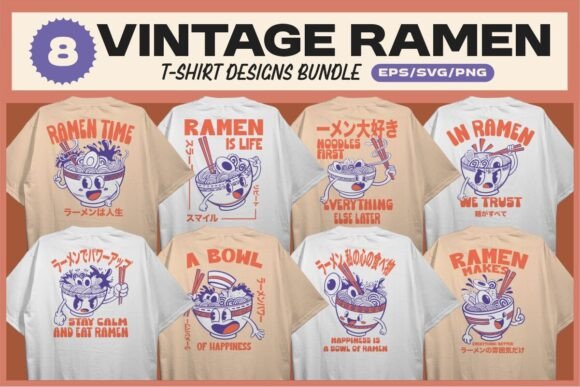
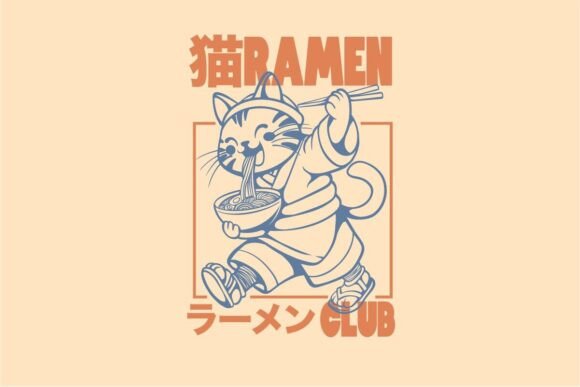
There is a specific kind of visual storytelling that happens when typography meets culinary culture, and few things capture that intersection better than the Vintage Japanese Food Ramen Club T-shirt. This isn't just a graphic; it is a full-fledged design asset that taps into the massive cultural appreciation for Japanese cuisine and vintage aesthetics. For designers, entrepreneurs, and content creators, this vector bundle offers a distinct blend of retro charm and modern utility. The visual personality here leans heavily into nostalgia—think weathered textures, classic badge layouts, and a sense of "lived-in" quality that makes the design feel like it has a history.
The Visual Identity: More Than Just a Graphic
When you look at the Vintage Japanese Food Ramen Club T-shirt, you are seeing a carefully constructed composition. It typically functions as a premium font ecosystem within a single image, mixing bold, blocky serif font styles with more delicate, perhaps handwritten font or script font elements to create visual hierarchy. This is crucial for logo design and brand identity. The design relies on high contrast and negative space to ensure that the central theme—the ramen—is the hero, while the supporting text frames the narrative.
For those in the clothing brands space, this design acts as a ready-made centerpiece. It avoids the coldness of sterile modern typography in favor of something warmer and more tactile. The "vintage" aspect isn't just a filter; it is integrated into the line work and layout, suggesting a display font aesthetic that commands attention on a flat surface. Whether you are looking at the EPS, SVG, or PNG files, the 100% vector nature ensures that the personality of the design remains intact, preserving the subtle imperfections that give vintage art its soul.
Strategic Applications: From Screen to Merchandise
Understanding where to deploy the Vintage Japanese Food Ramen Club T-shirt is about recognizing the versatility of the file formats included. Because the asset is delivered in EPS and SVG formats, it is fully scalable. This is a massive advantage for mass production and print on demand businesses. You can scale this design up for a large poster or down for a mug without losing the crispness of the lines, a common issue with rasterized graphics.
Here is how creative professionals can leverage this asset across different mediums:
- Apparel & Merchandise: The design is optimized for digital printing, sublimation, and screen printing. This makes it ideal for t-shirts, hoodies, and tote bags. Because it is a 100% Vector graphic, you can easily manipulate the colors in Adobe Illustrator to match specific fabric dyes.
- Digital Marketing & Social Media: For social media graphics or blog headers, the PNG file offers a quick, high-resolution solution (300 DPI). It works perfectly for Instagram posts promoting a food blog or a restaurant's special menu.
- Editorial & Packaging Design: If you are working on a food magazine or packaging design for a noodle shop, the retro aesthetic fits perfectly into a "heritage" or "artisanal" brand identity. It pairs well with clean sans serif font body text to create a balanced visual hierarchy.
Readability and Brand Perception
In web design and editorial design, readability is king. While the Vintage Japanese Food Ramen Club T-shirt design is visually complex, its strength lies in its composition. The layout is structured to guide the eye. For entrepreneurs using this for offline or online stores, this structured chaos actually helps brand perception. It communicates that the brand values tradition, flavor, and a specific sub-culture of food appreciation.
When applying this to merchandise, consider the "canvas." The prompt notes it is suitable for any t-shirt color. This is a practical feature. A dark background (black, navy) often makes the vintage details pop, creating a high-contrast look that feels authentic to the vintage style. However, applying it to a lighter, washed-out fabric (like a sand or pale pink) can enhance the "faded" retro vibe, creating a softer brand identity that appeals to a different demographic.
Practical Guidance for Designers and Creators
For the designer, marketer, or small business owner, integrating a pre-made asset like this into a workflow requires a strategic approach. You aren't just buying a picture of noodles; you are acquiring a design asset that solves a specific visual problem.
Evaluating Project Fit: Does your client or brand have a "quirky," "retro," or "foodie" personality? If the brand voice is ultra-corporate or minimalist, this design might clash. However, for crafters, hobbyists, and content creators focused on lifestyle, food, or travel, this is a perfect fit. It adds immediate character that would take hours to recreate from scratch.
Font Pairing and Hierarchy: If you are building a larger campaign around this design, think about font pairing. Since the main graphic acts as a heavy display font or headline, your supporting text needs to be legible. A geometric sans serif font works best for product descriptions or pricing, as it won't compete with the ornate details of the ramen graphic. Avoid using another script font or handwritten font for supporting text, as it will create visual clutter and hurt readability.
Commercial Licensing and Production: The files are described as Ready-to-Print. This implies a level of technical preparation that saves you money in production. You don't need to spend billable hours cleaning up vector nodes or converting color modes. However, always review the specific licensing if you plan on mass production. For most Print on Demand platforms, the asset is ready to go, but for large-scale retail distribution, verifying the commercial rights is a professional necessity.
Ultimately, the Vintage Japanese Food Ramen Club T-shirt design is a versatile tool. It bridges the gap between creative font usage and functional graphic design. It allows a blogger to create a cohesive look for a recipe series or a clothing brand to launch a capsule collection centered around food culture. By treating this asset as a foundational element of your visual hierarchy, you can create professional, engaging content that resonates with audiences who appreciate both the art of design and the comfort of a good bowl of ramen.